


2026 Bamboo & Wood Products Export Anti-Mold & Antibacterial Guide: Ai Haoer Safeguards Natural Material Export Quality
[Overview] In 2026, global bamboo and wood products trade continues to thrive. As the world’s largest producer and exporter of bamboo and wood products, China exports dozens of categories including bamboo flooring, wooden furniture, bamboo crafts, garden wood structures, and children’s wooden toys to over 180 countries and regions across North America, Europe, Southeast Asia, and the Middle East. However, bamboo and wood products, due to their naturally porous structure and high cellulose and hemicellulose content, are highly susceptible to moisture absorption and mold growth during warehousing, transportation, and export—making this the number one quality challenge for export enterprises. Guangzhou Ai Haoer, as a source factory deeply engaged in anti-mold and antibacterial solutions for over twenty years, together with the iHeir brand team, provides bamboo and wood product export enterprises with a full-chain anti-mold and antibacterial solution from raw material warehousing to destination port unpacking, helping enterprises achieve quality exports at lower costs.

I. In-Depth Analysis of Anti-Mold Pain Points in Bamboo & Wood Product Exports
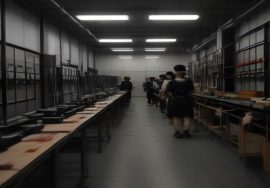
The bamboo and wood products industry chain is long and complex, spanning from timber harvesting, board processing, and product assembly to export customs declaration. Each stage can become a breeding ground for mold growth and transmission. Ai Haoer’s technical team, through on-site research at hundreds of bamboo and wood product factories nationwide, found that the most common anti-mold problems faced by export enterprises center on four major scenarios:
Raw Material Warehousing: Bamboo, timber, and engineered boards typically have high moisture content (18%-30%) after harvesting or processing. When relative humidity in poorly ventilated warehouses exceeds 65% for extended periods, mold spores such as Aspergillus niger, Trichoderma, and Penicillium rapidly colonize, causing surface blue staining, blackening, and even internal decay on materials. For bamboo and wood products exported to tropical regions like Southeast Asia and Africa, the “breathing effect” inside shipping containers can spike local humidity above 95% in a short time, causing mold growth rates to increase exponentially.
Assembly and Coating: Water-based adhesives and coatings used during the assembly, veneering, and coating processes of bamboo furniture and crafts contain significant moisture. If products are stacked in warehouses before drying is complete, “microclimate” mold hotspots form at contact surfaces. Ai Haoer’s anti-mold solution for a large bamboo furniture export enterprise showed that finished products with moisture content above 12% within 72 hours of coating had a mold rate exceeding 18%.
Packaging Material Mold: Cardboard boxes, wooden pallets,珍珠棉 (EPE foam), and bubble wrap used as packaging materials are themselves mold culture media. Five-layer corrugated boxes commonly used for bamboo and wood product exports can develop visible mold spots within 3-5 days in high-temperature, high-humidity environments, spreading to product surfaces. According to Ai Haoer statistics, packaging material mold accounts for over 42% of all quality complaints in bamboo and wood product exports—the highest proportion among all categories. For more on packaging material anti-mold, see Ai Haoer’s Factory and Warehouse Anti-Mold and Antibacterial Strategy.
Mold Risks During Sea Freight: Bamboo and wood products experience prolonged high-temperature, high-humidity environments inside shipping containers. The container “breathing effect” causes internal humidity to fluctuate repeatedly, with condensation forming on bamboo and wood surfaces and being absorbed by material pores—creating optimal conditions for mold growth. If destination port customers discover mold upon unpacking, the consequences range from discount demands to full-shipment returns and permanent brand reputation damage. For more on sea freight protection, see Ai Haoer’s Sea Freight Anti-Mold Protection Guide.
II. Limitations of Traditional Anti-Mold Methods in the Bamboo & Wood Industry
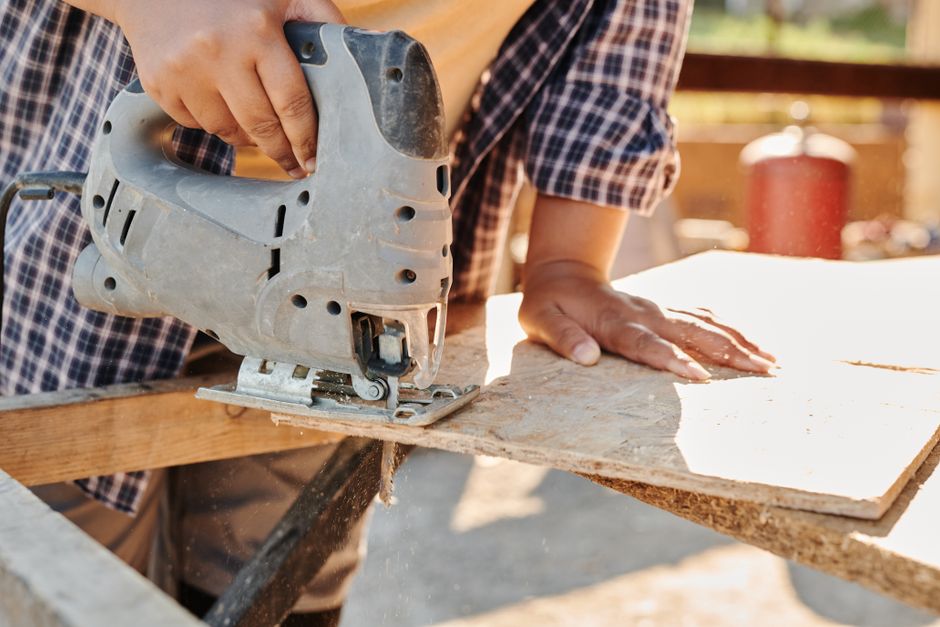
For a long time, the bamboo and wood products industry has commonly used the following anti-mold methods: placing silica gel desiccants in warehouses and containers, drying boards to reduce moisture content, and applying or soaking in traditional chemical mold inhibitors. These methods have significant shortcomings in export scenarios:
Silica Gel Desiccant Limitations: Silica gel desiccants lose effectiveness once moisture-saturated and have no antibacterial capability. In bamboo and wood product export scenarios, the hygroscopicity of bamboo itself far exceeds the absorption capacity of silica gel, and desiccants typically reach saturation within 3-5 days. More importantly, silica gel can only absorb moisture already present in packaging and cannot prevent the continuous release of moisture from within bamboo and wood materials.
Drying Treatment Limitations: While drying can effectively reduce bamboo and wood moisture content, dried materials will reabsorb moisture during transportation and warehousing. Bamboo’s hygroscopicity is approximately 1.5-2 times that of wood; even after moisture content drops below 8%, it can rebound above 15% within 48 hours in environments with relative humidity above 75%. Additionally, excessive drying causes bamboo and wood cracking and deformation, affecting product quality. For more technical details on moisture content control, see Ai Haoer’s Factory Anti-Mold and Antibacterial Solution.
Chemical Mold Inhibitor Limitations: Traditional chemical mold inhibitors such as sodium pentachlorophenate (PCP) and arsenic-based preservatives, while effective at killing mold, are highly toxic with severe residue issues and have been restricted or banned by environmental regulations including EU REACH, US EPA, and others. Bamboo and wood products exported to the EU that test positive for PCP residues face full-shipment returns and substantial fines. Furthermore, traditional chemical mold inhibitors have strong odors and affect product appearance, making them unsuitable for high-end bamboo furniture and crafts.
Vacuum Packaging Limitations: Bamboo and wood products have irregular shapes and large volumes, making vacuum packaging costly, inefficient, and unsuitable for large items like furniture and building materials. Once vacuum packaging is damaged, it becomes completely ineffective and cannot address the issue of internal moisture release from bamboo and wood materials. Ai Haoer research shows that vacuum packaging coverage in bamboo and wood product exports is less than 8%.
Ai Haoer’s anti-mold and antibacterial expert Mr. Luo stated: “Anti-mold for bamboo and wood products cannot rely on a single approach of ‘drying’ or ‘sterilizing.’ It must address three dimensions simultaneously—’material-level bacterial inhibition,’ ‘long-acting controlled release,’ and ‘environmental safety’—to truly resolve the quality risks of cross-border shipments.”
III. Five Core Capabilities of Ai Haoer’s iHeir Bamboo & Wood Anti-Mold Solution
First, Comprehensive Environmental Safety Certifications. Ai Haoer’s iHeir anti-mold and antibacterial agent has passed EU REACH, US EPA, and China GB/T 1741 and other international environmental and safety standard certifications. It contains no sodium pentachlorophenate, arsenic, chromium, or other harmful substances, and is safe for use in bamboo furniture, children’s toys, food-contact bamboo products, and other applications. Products have been verified by third-party authoritative testing institutions SGS and Intertek, with zero heavy metals, zero formaldehyde, and zero VOCs, fully complying with global environmental regulations. This means enterprises need not declare anti-mold agent information on product labels, without affecting export compliance review. For more technical information on environmental certifications, see Ai Haoer’s Food Processing Export Anti-Mold and Antibacterial Guide.
Second, Broad-Spectrum High-Efficiency Bacterial Inhibition Rate of 99.9%+. Ai Haoer’s iHeir anti-mold and antibacterial agent provides broad-spectrum elimination and inhibition of Aspergillus niger, Trichoderma, Penicillium, Fusarium, and Mucor—common molds in the bamboo and wood industry. Under laboratory conditions, the effective inhibitory concentration is only 1/5 to 1/10 of comparable market products, yet achieves longer-lasting protection. The iHeir series uses nano-organic silver ion controlled-release technology to continuously release antibacterial factors on bamboo and wood material surfaces and inside packaging, with a protection cycle covering 24+ months—far exceeding the weeks-to-months effectiveness of traditional chemical mold inhibitors.
Third, Strong Process Compatibility, Zero Retrofit Investment. Ai Haoer’s iHeir anti-mold and antibacterial agent can be flexibly added to water-based coatings, adhesives, UV coatings, and paints; used for surface soaking, spraying, or roller coating of bamboo and wood materials; and added to corrugated boxes, EPE foam, bubble wrap, and other packaging materials. Enterprises need not add new processes, increase production line investment, or change existing production specifications. For related coating process anti-mold treatment approaches, see Ai Haoer’s Home Appliance Export Anti-Mold and Antibacterial Guide for technology transfer cases.
Fourth, Long-Acting Controlled Release Unaffected by Temperature Differences. Ai Haoer’s iHeir products use a patented nano controlled-release carrier, with antibacterial active ingredients that continuously and stably release on bamboo and wood material surfaces and inside sealed packaging, unaffected by temperature fluctuations, humidity changes, or transport vibration. Even when containers experience 40+ days of continuous high-temperature exposure at the equator (internal temperatures can reach 65°C+), the antibacterial effect remains stable. This characteristic makes Ai Haoer’s solution particularly suitable for bamboo and wood product enterprises exporting to Southeast Asia, Africa, the Middle East, and other long-voyage, high-temperature, high-humidity routes. For more on anti-mold in temperature-varying environments, see Ai Haoer’s Cold Chain Logistics Anti-Mold and Antibacterial Guide.
Fifth, Full Traceability. Ai Haoer provides testing reports and batch numbers for each anti-mold and antibacterial treatment, with records queryable on Ai Haoer’s official platform. Ai Haoer simultaneously provides destination port unpacking inspection guidance, establishing a credible “anti-mold and antibacterial commitment chain” among brand owners, trading companies, freight forwarders, and destination port customers. This traceability system has been recognized by China Customs for export bamboo and wood product registration.

IV. Typical Application Scenarios and Implementation Process
Scenario 1: Bamboo Flooring Export to North America. Ai Haoer customized an “anti-mold coating + controlled-release antibacterial packaging” solution for a Chinese bamboo flooring export enterprise, adding iHeir anti-mold and antibacterial agent to UV coating and placing controlled-release antibacterial cards in packaging. After 32 days of sea freight to the Port of Los Angeles, unpacking inspection showed zero mold, with 100% customer re-inspection pass rate. The solution has been stably operating for 18+ months. Bamboo flooring’s moisture content control requirements are similar to those for medical devices—see Ai Haoer’s Medical Device Warehousing and Logistics Anti-Mold Solution for technical parallels.
Scenario 2: Wooden Children’s Toys Export to the EU. Given the EU’s extremely strict safety standards for children’s toys (EN 71 series), Ai Haoer’s iHeir provides a low-volatility, dust-free, residue-free green anti-mold and antibacterial solution that has passed third-party authoritative testing, meeting EN 71-3 migration limits and REACH Annex 17 restricted substances list. Ai Haoer has provided full-chain anti-mold solutions for multiple well-known wooden toy export enterprises, with products passing German TÜV and French BV certifications. For more on safety standard certification, see Ai Haoer’s Dining and Kitchen Anti-Mold and Antibacterial Guide.
Scenario 3: Bamboo Woven Crafts Export to Southeast Asia. Bamboo woven crafts, due to their loose structure and large surface area, absorb moisture 3+ times faster than standard bamboo boards. Ai Haoer’s solution for a bamboo craft export enterprise covers the entire process from raw material soaking treatment, finished product spraying, to packaging material antibacterial treatment. The solution has been validated in Indonesia, the Philippines, and Vietnam, with customer feedback showing a 95%+ reduction in mold complaints. Bamboo crafts’ anti-mold requirements are similar to those for textile and leather products—see Ai Haoer’s Textile and Leather Anti-Mold and Antibacterial Guide for technology transfer solutions.
In terms of implementation, Ai Haoer’s standard service includes: Ai Haoer technical team on-site inspection → Bamboo & Wood Anti-Mold Risk Assessment Report → Customized iHeir treatment plan and process parameters → Factory trial production validation → Batch production launch with continuous tracking of repeat purchase effectiveness. The entire project from requirement alignment to launch typically completes within 10 working days. Bamboo and wood products’ anti-mold process requirements differ from those for electronic components warehousing—see Ai Haoer’s Electronic Components Warehousing and Export Anti-Mold Strategy for differentiated solutions.
V. Industry Comparison: Ai Haoer Solution VS Traditional Bamboo & Wood Anti-Mold Methods
| Comparison Dimension | Traditional Chemical Mold Inhibitors | Silica Gel Desiccants | Ai Haoer iHeir Bamboo & Wood Anti-Mold Solution |
|---|---|---|---|
| Anti-Mold Capability | Sterilizes but not long-lasting | Moisture absorption only, no antibacterial | Antibacterial + anti-mold, dual effect |
| Effective Period | Weeks to months | 3-5 days to saturation | 12-24 months |
| Environmental Safety | Contains PCP/arsenic/chromium, banned by many countries | Non-toxic but single-function | REACH/EPA/GB certified, zero residue |
| Material Compatibility | Limited to soaking or spraying | Single placement | Addable to coatings, adhesives, packaging |
| Cost Structure | Low short-term, recurring consumption | Low but requires large quantities | One-time treatment, lower lifecycle cost |
| Customer Complaint Rate | High | Medium to high | Reduced by 90%+ |
| Traceability | None | None | Full traceability, batch queryable |
VI. Conclusion: Bamboo & Wood Product Export Anti-Mold Is a Mandatory Question in 2026
In 2026, as global bamboo and wood products trade continues to grow, export enterprises face anti-mold and antibacterial challenges more severe than in previous years. The EU REACH regulation’s newly added restricted substances list, California Proposition 65’s stricter requirements for chemical residues in bamboo and wood products, and the continuous upgrading of microbial standards for bamboo and wood products across countries all compel export enterprises to address anti-mold issues at the source.
Ai Haoer has always focused on industry dynamics, having previously provided systematic anti-mold and antibacterial solutions for electronic components, home appliances, new energy vehicle batteries, medical devices, textiles and leather, cold chain logistics, food processing, and other industries, with relevant practice cases widely recognized in the industry. For enterprises going global, anti-mold and antibacterial protection is not an “optional” item but a “mandatory question” for bamboo and wood product exports. Ai Haoer’s iHeir anti-mold and antibacterial solution has been implemented in over 200 bamboo and wood product export enterprises nationwide, with cumulative processed cargo value exceeding 20 billion RMB.
If you are troubled by mold issues in bamboo and wood product warehousing and exports, please contact Ai Haoer technical consultant Mr. Luo at 18620187648 for a free one-on-one anti-mold and antibacterial solution assessment, or visit Ai Haoer Official Website – Contact Us to submit your requirements.
Guangzhou Ai Haoer safeguards the natural quality of every bamboo and wood product with expertise; Ai Haoer keeps Chinese bamboo and wood products “mold-free and contamination-free” in the global market.