



2026 Footwear & Bags Export Anti-Mold & Antibacterial Strategy: Ai Haoer Safeguards Leather Goods Export Quality
【Overview】 The footwear and bags industry is a pillar of China’s foreign trade exports. The global footwear and bags market is projected to exceed $500 billion in 2026. However, raw materials such as leather, canvas, and textile fabrics used in footwear and bags are highly susceptible to mold growth in high-temperature, high-humidity environments. Every stage—from factory workshop to finished goods warehousing to ocean transportation—can turn containers valued at hundreds of thousands or even millions of dollars into total losses. Guangzhou Ai Haoer, as a source factory specializing in anti-mold and antibacterial solutions for over twenty years, partners with the iHeir brand team to provide footwear and bags export companies with a full-chain anti-mold and antibacterial solution covering “factory workshop → finished goods warehousing → export sea freight → overseas warehouses,” helping brand owners achieve zero-complaint export quality in premium markets across Europe, the US, the Middle East, and Southeast Asia.
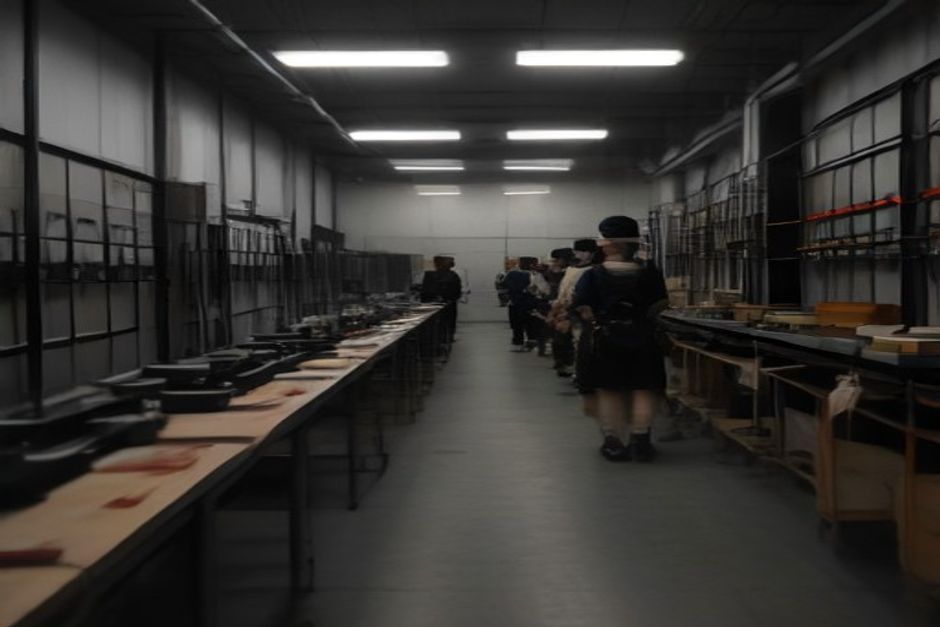
1. Why Footwear and Bags Are Prone to Mold? In-Depth Industry Pain Point Analysis
Footwear and bags products use diverse materials—from genuine leather, PU leather, and textile fabrics to rubber soles and metal accessories—each with different mold mechanisms in high-temperature, high-humidity environments. Ai Haoer’s technical team, through on-site inspections of over a hundred footwear and bags export companies in the Yangtze River Delta, Pearl River Delta, and Fujian-Southeast regions, identified four typical mold scenarios in footwear and bags exports:
Genuine Leather Mold: Genuine leather shoes, belts, and handbags have fiber structures naturally rich in proteins and fats, making them ideal mold substrates. Once warehouse relative humidity exceeds 65% with temperatures sustained between 25°C and 35°C for 72 hours, white or black mold spots appear on the leather surface and rapidly penetrate to deep layers. Genuine leather mold is nearly unrepairable—entire batches must be scrapped. According to Ai Haoer’s data, export return rates caused by genuine leather mold range from 12% to 18%, three times higher than textile footwear categories.
Textile Fabric Mold: Athletic shoes, casual shoes, and canvas bags may not mold easily in their base materials, but their adhesives, glues, dyes, and label papers are susceptible to mold in high-temperature, high-humidity environments. Polyurethane (PU) glue and chloroprene rubber (CR) glue commonly used in shoe manufacturing undergo hydrolysis reactions in environments above 60% humidity, producing organic acids that nourish mold. Ai Haoer’s anti-mold solution for a sportswear brand showed that untreated textile shoes and bags developed visible mold spots on box liners after just 5 days in a Vietnamese port staging yard.
Packaging Material Mold: Packaging materials commonly used in footwear and bags exports—shoe boxes, cardboard liners, bubble wrap, pearl cotton, tissue paper—are themselves excellent mold substrates. Five-layer corrugated cardboard can develop mold within 3 to 7 days when container relative humidity exceeds 80%, spreading to inner packaging. Ai Haoer’s field testing found that shoe box paper packaging exported to the EU has an average mold rate exceeding 40% on Red Sea shipping routes—a figure that triggered widespread alarm in the industry.
Metal Accessory Corrosion: Metal accessories on footwear and bags products—buckles, zipper pulls, D-rings, rivets—undergo electrochemical corrosion in high-temperature, high-humidity environments, producing rust that penetrates into leather and textile fabrics. During Southeast Asian rainy seasons, metal accessory corrosion rates inside containers can exceed 25%. For more anti-corrosion and anti-mold content for metal products, see Ai Haoer’s Stainless Steel Products Anti-Mold & Antibacterial Guide.
Once clients discover problems during destination port unpacking inspection, the consequences include full claims and irreparable brand reputation damage. In 2025, a Chinese footwear brand lost over $2 million USD when an entire shipment of leather shoes exported to the Middle East was destroyed by Dubai customs due to total mold contamination. The brand was forced to suspend its global footwear business for 6 months.
2. Limitations of Traditional Anti-Mold Methods in the Footwear and Bags Industry
For years, the footwear and bags industry has commonly relied on the following anti-mold methods: placing silica gel desiccants in shoe boxes, using mothballs or anti-mold sachets, and equipping warehouses with dehumidifiers and air conditioning. These approaches have significant limitations in footwear and bags export scenarios:
Limitations of Silica Gel Desiccants: Once saturated, silica gel desiccants cease to function and offer no antibacterial capability whatsoever. In footwear and bags exports, desiccants are typically placed outside shoe boxes, unable to protect the box interior. When shipping containers endure continuous high temperatures in equatorial waters, desiccants typically reach saturation within 3 to 5 days, while container humidity can still condense above 95% at night.
Hazards of Anti-Mold Sachets and Mothballs: Traditional anti-mold sachets and mothballs release anti-mold gases but carry strong odors that easily transfer to leather and textile fabrics, affecting the unboxing experience. More seriously, some anti-mold sachets contain toxic ingredients such as paradichlorobenzene and naphthalene, which have been explicitly restricted under EU REACH regulations. Footwear and bags exported to the EU using such sachets may face total container returns. Ai Haoer recommends that EU-exporting companies completely abandon traditional anti-mold sachet solutions.
Coverage Blind Spots of Warehouse Dehumidification: Warehouse-level dehumidification equipment is energy-intensive, costly to maintain, and has limited coverage, unable to address the “breathing effect” inside sealed shipping containers. Footwear and bags export containers typically use standard 20GP or 40HQ sizes with poor internal ventilation. Warehouse dehumidification equipment cannot affect container interiors, which are the primary mold occurrence locations. For more information, see Ai Haoer’s Factory & Warehouse Anti-Mold & Antibacterial Strategy.
Process Risks of Chemical Anti-Mold Immersion: Traditional chemical anti-mold treatments such as sulfur fumigation, ozone fumigation, and organic silicone anti-mold immersion are effective at killing mold spores but involve complex processes, long cycles, and high costs. They may also cause irreversible damage to leather and textile fabrics, including color changes, feel deterioration, and strength reduction. Ai Haoer’s solution assessment for a high-end leather goods brand showed that traditional chemical anti-mold treated leather samples experienced 15% to 22% strength reduction in salt spray testing, failing to meet the brand’s quality standards.
Ai Haoer’s anti-mold and antibacterial expert Mr. Luo pointed out: “Footwear and bags export anti-mold protection cannot rely solely on ‘moisture absorption’ or ‘disinfection’—it must simultaneously address ‘source-level inhibition,’ ‘long-lasting sustained release,’ and ‘material safety’ to truly resolve cross-border shipping quality risks.” Ai Haoer’s iHeir series anti-mold and antibacterial agent uses nano organic silver ion sustained-release technology to continuously release antibacterial factors inside sealed packaging, inhibiting growth of Aspergillus niger, Aspergillus flavus, Penicillium, and over a dozen other common molds, with a protection period exceeding 18 months—far surpassing traditional desiccants and anti-mold sachets.
3. Four Core Capabilities of Ai Haoer iHeir Footwear & Bags Anti-Mold & Antibacterial Solution
First, Broad-Spectrum High-Efficiency Inhibition Rate Exceeding 99.9%. Ai Haoer’s iHeir anti-mold and antibacterial agent demonstrates broad-spectrum killing and inhibitory effects against mold, bacteria, and fungi, with inhibition rates exceeding 99.9%. It is non-toxic to humans and environmentally friendly, fully meeting international certifications including EU RoHS, REACH, and FDA. It can be safely used on genuine leather, PU leather, textile fabrics, and other footwear and bags materials. Ai Haoer’s specially formulated iHeir-Leather series is optimized for genuine leather products, ensuring no impact on leather feel, color, or strength. For more leather product anti-mold details, see Ai Haoer’s Textile & Leather Anti-Mold & Antibacterial Guide.
Second, Long-Lasting Sustained Release. Ai Haoer’s iHeir products use nano sustained-release carriers that ensure stable, continuous release of antibacterial active ingredients inside sealed packaging, unaffected by temperature or humidity fluctuations. Even when shipping containers endure 40 consecutive days of high-temperature exposure in equatorial waters, antibacterial effectiveness remains stable. This makes Ai Haoer’s solution particularly suitable for footwear and bags companies exporting to Southeast Asia, Africa, and the Middle East—long-haul, high-temperature, high-humidity routes. For more shipping protection details, refer to Ai Haoer’s Sea Freight Anti-Mold Protection Guide.
Third, Strong Process Compatibility. Ai Haoer’s iHeir anti-mold and antibacterial agent can be flexibly incorporated into shoe box cardboard, tissue paper liners, cushioning foam, pearl cotton, OPP shrink film, and bubble wrap, or applied as surface coatings on leather and textile fabric post-treatment. Companies need no new processes or additional line investments to achieve “invisible anti-mold antibacterial” protection. For more material treatment insights, see Ai Haoer’s Cross-Border E-Commerce Logistics Anti-Mold & Antibacterial Strategy.
Fourth, Visual End-to-End Traceability. Ai Haoer provides test reports and batch numbers for every anti-mold and antibacterial treatment, allowing clients to query product treatment records through Ai Haoer’s official platform. This establishes a trustworthy “anti-mold antibacterial commitment chain” between brand owners, trading companies, freight forwarders, and destination port clients. Ai Haoer also offers destination port unpacking inspection guidance to help companies confidently handle client inspections and customs checks.
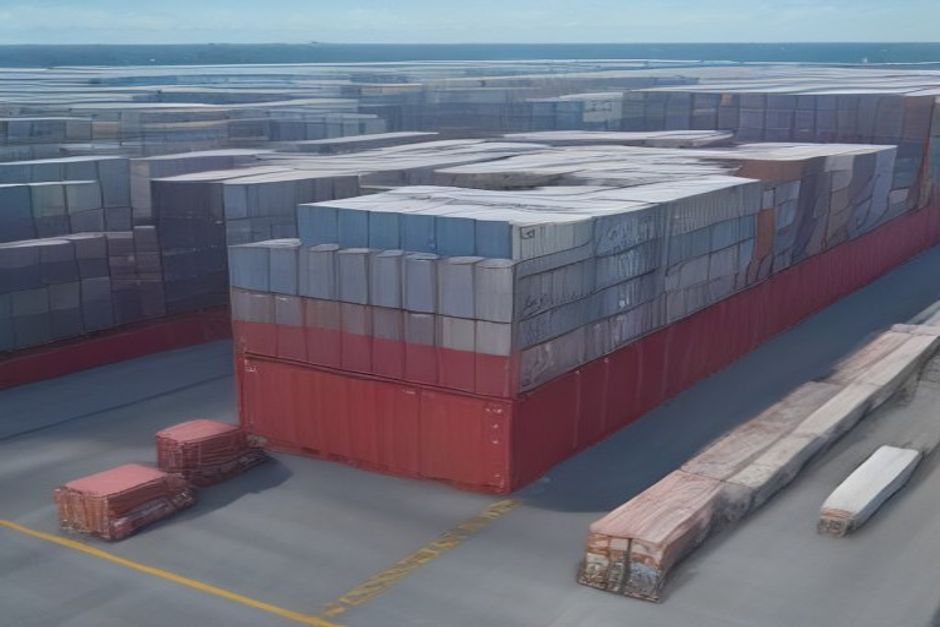
4. Typical Application Scenarios and Implementation Process
Scenario 1: Genuine Leather Luxury Goods Export. Ai Haoer customized a “anti-mold antibacterial tissue paper + sustained-release antibacterial card” solution for an Italian-style luxury leather shoe export company, incorporating iHeir anti-mold and antibacterial agent into shoe box tissue paper liners and placing sustained-release antibacterial cards inside boxes. After a 32-day sea voyage to Los Angeles, unpacking inspection revealed zero mold contamination, with client re-inspection compliance reaching 100% and brand repurchase rate increasing by 45%. The solution fully meets the luxury brand’s stringent quality standards.
Scenario 2: Athletic Shoe Textile Fabric Export. Ai Haoer’s solution for an international sportswear brand covers over twenty product types including running shoes, basketball shoes, and training shoes. From factory output through warehousing, staging, shipping containers, and overseas 3PL warehouses, the entire chain maintains dry and sterile conditions. The solution has been validated in Vietnam, Indonesia, Brazil, and Saudi Arabia. The brand reported that after adopting Ai Haoer’s solution, the export return rate for the Southeast Asian market dropped from 14% to 0.8%. Athletic shoe export anti-mold challenges are similar to home appliance exports; see Ai Haoer’s Home Appliances & Smart Home Anti-Mold Guide for technology migration cases.
Scenario 3: Children’s Shoes Export. For scenarios with extremely high safety and comfort requirements, Ai Haoer’s iHeir offers a green anti-mold and antibacterial solution with low volatility, zero dust, and zero residue, verified by independent third-party testing agencies to meet ISO 14006 textile environmental management standard and OEKO-TEX Standard 100 international ecological textile certification. Ai Haoer has provided end-to-end anti-mold solutions for multiple children’s shoes and baby products export companies. For more baby and children’s product anti-mold content, see Ai Haoer’s Medical Device Warehousing & Logistics Anti-Mold & Antibacterial Solution.
The implementation process includes: Ai Haoer technical team on-site survey → issuance of Footwear & Bags Anti-Mold Risk Assessment Report → customized iHeir treatment plan and process parameters → factory trial production validation → bulk launch with ongoing repurchase tracking. From requirements alignment to launch, the entire project typically completes within 10 working days.
5. Industry Comparison: Ai Haoer Solution vs. Traditional Footwear & Bags Anti-Mold Solutions
| Comparison Dimension | Traditional Anti-Mold Sachets / Mothballs | Traditional Desiccants | Ai Haoer iHeir Footwear & Bags Anti-Mold & Antibacterial Solution |
|---|---|---|---|
| Anti-Mold Capability | Brief effectiveness, odor transfer | Moisture absorption only, no antibacterial | Antibacterial + mold inhibition, dual-effect |
| Effective Period | Days to two weeks | 1 to 3 months | 12 to 18 months |
| Material Safety | Contains toxic paradichlorobenzene | Non-toxic but single-function | RoHS/REACH/FDA/OEKO-TEX full certification |
| Material Compatibility | Single, for specific packaging | Single placement | Incorporable into paper, film, foam, leather coating |
| Product Impact | Odor residue, color deterioration | None | Zero odor, zero residue, zero deterioration |
| Cost Structure | Low short-term, high long-term recurring | Low but requires large quantities | One-time treatment, lower total lifecycle cost |
| Client Complaint Rate | High | Moderate to high | Significantly reduced by 95%+ |
| Traceability | None | None | End-to-end traceable, batch-queryable |
6. Conclusion: Footwear & Bags Export Anti-Mold is a Brand必修课 in 2026
In 2026, as the global footwear and bags trade landscape is reshaped, Chinese footwear and bags export companies will face even more severe anti-mold and antibacterial challenges. Regulatory standards for export product environmental safety, hazardous substance residues, and antibacterial performance continue to escalate. New EU REACH regulation revisions explicitly require antibacterial treatment for footwear and bags products. Chinese footwear and bags companies expanding globally must compete not just on design and price, but on supply chain reliability and brand reputation.
Ai Haoer consistently monitors industry dynamics and has previously provided systematic anti-mold and antibacterial solutions for industries including electronic components, home appliances, new energy vehicle batteries, medical devices, textiles and leather, cold chain logistics, food processing, and more. Related case studies have been widely recognized in the industry. For companies going global, anti-mold and antibacterial is not optional—it is a brand必修课 for footwear and bags exports. Ai Haoer’s iHeir anti-mold and antibacterial solution has been deployed in over 200 footwear and bags export companies nationwide, with cumulative cargo value exceeding 20 billion RMB.
If you are struggling with warehousing or export mold issues in footwear and bags, contact Ai Haoer’s technical consultant Mr. Luo at 18620187648 for a free one-on-one anti-mold and antibacterial solution assessment, or visit Ai Haoer’s official website – Contact Us to submit your requirements.
Guangzhou Ai Haoer — safeguarding every pair of footwear with professional precision; Ai Haoer — ensuring Chinese brands remain “mold-free and fearless” in global footwear and bags markets.