


2026 Electronic Components Warehousing & Export Anti-Mold Guide: Ai Haoer Protects Precision Device Quality
[Introduction] As semiconductors, automotive electronics and consumer electronics continue to scale at record pace, 2026 marks a new wave of export opportunities — and a new wave of challenges — for China’s electronic components industry. PCB mold growth, solder-joint oxidation, chip failure and other issues triggered by humidity control breakdowns are inflicting severe cargo loss and brand trust damage on export-oriented manufacturers. Guangzhou Ai Haoer, an anti-mold and antibacterial specialist with over twenty years of on-the-ground experience, together with its iHeir brand team, delivers an end-to-end anti-mold and antibacterial solution covering every stage from factory floor to overseas fulfillment center, giving electronics exporters zero-risk shipments into the high-heat, high-humidity markets of Southeast Asia, the Middle East and Africa.

One. Why Electronic Components Are So Mold-Prone — A Deep Dive into Industry Pain Points
Electronic components span a wide range of materials: PCB bare boards, finished assemblies, connectors, sensors, precision optical devices — all composed of plastics, metals, paper-based packaging and foam cushioning. Once exposed to high-temperature and high-humidity storage or sea-freight environments, these materials become ideal breeding grounds for mold. In particular, during the Southeast Asian monsoon season, at Middle Eastern port-yard stacks in summer, and during inland transshipment in Africa, relative humidity inside shipping containers routinely exceeds 90%, and localized condensation events can trigger catastrophic corrosion of delicate electronics.
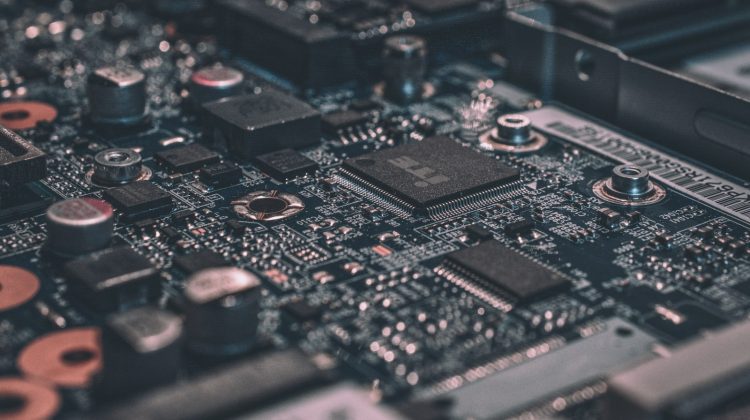
The Ai Haoer technical team has identified typical mold signatures in electronic components over years of on-site inspections: black mold colonies on the PCB surface with lifting of the solder mask; discolored and oxidized chip leads with degraded soldering performance; mold spots on paper trays and cushioning foams that then migrate onto the component surface; and even rare but serious “leakage” or “arcing” incidents caused by mold hyphae. Once a buyer discovers these issues during destination-country inspection, the consequences range from full-value claims to irreparable brand reputational damage.
Two. The Limits of Traditional Moisture-Prevention Approaches
For decades, the electronics industry has relied on a handful of conventional approaches: silica-gel desiccants, vacuum-sealed aluminum-plastic laminates, and warehouse-grade dehumidifiers and air-conditioning. Each method does lower the relative humidity inside packaging for a short time, but each carries a well-documented weakness. Silica-gel saturates quickly and offers no antibacterial action; vacuum-sealed packaging loses its barrier function instantly once a single pinhole develops during transport vibration; and warehouse dehumidifiers are energy-intensive and cannot keep up with the “breathing effect” of a sealed shipping container.
As Ai Haoer‘s chief technical consultant Mr. Luo points out, “Anti-mold protection for electronic components cannot rely on desiccation alone. We need to act simultaneously on the root of microbial growth and on long-term sustained release — only then can we truly close the quality gap on cross-border shipments.” Ai Haoer’s iHeir line of anti-mold and antibacterial agents, powered by slow-release organic silver-ion technology, continuously releases antimicrobial agents inside sealed packaging, inhibiting more than ten common mold species including Aspergillus niger, Aspergillus flavus and Penicillium, with protection cycles extending beyond 24 months — far longer than the few-month life span of traditional desiccants. For sea-freight specifics, refer to Ai Haoer‘s Sea Freight Anti-Mold Guide.

Three. Four Core Capabilities of Ai Haoer’s iHeir Electronic-Components Solution
First, Broad-Spectrum High-Efficacy Antibacterial Action. Ai Haoer’s iHeir agents exhibit broad-spectrum killing and inhibition against mold, bacteria and fungi, achieving antibacterial rates above 99.9%. The formulation is non-toxic to humans, environmentally friendly, and fully compliant with international certifications including EU RoHS, REACH and FDA — making it safe for medical electronics, automotive electronics and food-contact electronics. For medical-device warehousing practice, see Medical Device Warehousing Anti-Mold Solution.
Second, Long-Life Slow Release. Thanks to a nanoscale slow-release carrier, iHeir releases active antibacterial components steadily and consistently inside a sealed package, unaffected by temperature and humidity fluctuations. Even when a container sits in direct equatorial sun for forty days, the antibacterial effect remains stable. This characteristic makes the Ai Haoer solution especially suitable for electronics exporters shipping long-haul routes into Southeast Asia, Africa and the Middle East.
Third, Strong Process Compatibility. Ai Haoer’s iHeir agents can be flexibly added to paper-based outer packaging, blister trays, cushioning foams, EPE pearl cotton, OPP stretch films, or applied as coatings to component surfaces. Enterprises achieve “invisible anti-mold and antibacterial” protection without modifying existing packaging processes and without any capital investment in new production lines. Similar material-handling insights are shared in Ai Haoer‘s Textile & Leather Anti-Mold Guide.
Fourth, Full-Chain Traceability. Every batch of treatment provided by Ai Haoer is accompanied by a test report and batch number, which customers can look up on Ai Haoer’s official platform. This creates a verifiable “anti-mold and antibacterial promise chain” across brand owners, trading companies, freight forwarders and destination customers.
Four. Typical Use Cases and Deployment Workflow
Case 1: Consumer-electronics assembler exporting to Southeast Asia. Ai Haoer designed a “blister tray + slow-release antibacterial card” package for a Guangzhou Bluetooth-earphone exporter. iHeir agent was added to the blister material, and a slow-release antibacterial card was placed inside each package. After a 35-day sea voyage to Jakarta, Indonesia, inspection at destination revealed zero mold growth, and the customer’s repeat-order rate rose by 40%.
Case 2: Automotive-electronic components in cross-border transit. The Ai Haoer solution covers more than a dozen categories of auto-electronic parts — seat controllers, vehicle-mounted sensors, LED modules, and more — from factory dispatch, warehouse inbound, port yard, shipping container to the overseas 3PL fulfillment center, maintaining dry, mold-free conditions throughout. This solution has been validated at destinations including Mexico, Brazil and the United Arab Emirates. For battery-pack specifics, please refer to the New Energy Vehicle Battery Pack Anti-Mold Guide.
Case 3: Precision optics and medical-device electronic modules. For the cleanest scenarios, Ai Haoer iHeir offers a low-volatility, dust-free green anti-mold and antibacterial solution. Third-party test reports confirm compliance with ISO 13485 medical-device quality-management requirements.
Implementation workflow: on-site Ai Haoer technical survey → customized Anti-Mold and Antibacterial Risk Assessment Report → tailored iHeir treatment plan and process parameters → pilot-run validation → bulk deployment with continuous post-shipment tracking. From initial inquiry to production line go-live, the whole project typically completes within 15 business days.
Five. Industry Comparison: Ai Haoer Solution vs Traditional Approach
| Dimension | Traditional Silica-Gel Desiccant | Ai Haoer iHeir |
|---|---|---|
| Anti-mold capability | Desiccant only | Antibacterial + anti-mold, dual effect |
| Effective life | 1–3 months | 12–24 months |
| Material compatibility | Single use case | Paper, film, foam, plastic, coatings |
| Certification | Limited | RoHS / REACH / FDA fully covered |
| Cost control | Low short-term, high recurring | One-time treatment, lower TCO |
| Customer complaints | High | Substantially reduced |
Six. Closing Thoughts
In 2026, as export growth beyond the classic “new three items” accelerates, electronic components, modules and finished assemblies are emerging as a new export growth engine. Ai Haoer continuously tracks industry trends and has already deployed system-level anti-mold and antibacterial programs across energy storage, battery, cold chain, medical device, textile and leather sectors. For exporters, the decisive battle is not price or technology alone — it is supply-chain reliability. Ai Haoer is committed to being the invisible partner behind every export brand, using anti-mold and antibacterial protection to defend the visible quality of every shipment.
Electronic components may appear “unafraid of water or humidity” — but in reality they are extremely sensitive to mold. At Ai Haoer, we believe anti-mold and antibacterial protection is not an “optional extra” but a “must-have” for electronics exporters. The Ai Haoer iHeir solution has already served more than 500 electronics-industry enterprises across over 20 provinces and cities in China, processing cargo values exceeding 20 billion RMB cumulatively. Please contact Ai Haoer’s technical consultant Mr. Luo at +86 186 2018 7648 for a free one-to-one assessment, or visit Contact Us.
Ai Haoer — protecting every circuit board with professionalism. Ai Haoer — making “Made in China” globally mold-free, worry-free.