


2026 Warehousing & Logistics Anti-Mold Trends: Ai Haoer Full-Chain Solution
In a climate where rising humidity, poor ventilation, and lengthening cross-border logistics cycles are the new normal, stored goods — from textiles and leather to machinery and food packaging — are facing an increasingly serious risk of mold growth and microbial contamination. As a comprehensive service provider deeply rooted in the field of mold prevention and antibacterial treatment, Ai Haoer recently conducted field visits to a number of manufacturers in South China and put together a full-chain anti-mold & antibacterial solution that covers everything from raw material intake to finished goods dispatch, and from domestic warehousing to international sea freight. The findings are shared here as a practical reference for warehousing, foreign trade, home-care, and industrial manufacturing sectors.
1. Why Warehousing Needs Anti-Mold Protection
Warehousing is one of the most common scenarios where mold outbreaks happen. High temperature, high relative humidity, closed space, and long-term stacking together create the perfect breeding ground for molds and bacteria. Once mold takes hold, goods can suffer visible damage, quality loss, buyer rejection, claims, and even full returns — losses that easily run into the hundreds of thousands or even millions of yuan. On top of that, mold spores travel through the air and can contaminate adjacent pallets, triggering a “cross-contamination” effect across the whole warehouse.
In a recent inspection project by the Ai Haoer testing team at a South China warehouse, a batch of leather products that had been stored for a long time showed a mold count exceeding 5×10⁴ CFU/g — far above international thresholds. Such hidden risks are invisible to the naked eye until it is already too late. Only systematic anti-mold inspection and proactive treatment can effectively prevent them.

2. Common High-Risk Scenarios and Categories
- Textiles and garments: Natural fibers such as cotton, linen, and silk become mold-prone when relative humidity exceeds 70%.
- Leather and luggage: Genuine leather is highly hygroscopic; stacked storage traps moisture inside.
- Wood and panels: Wood-based materials bonded with starch- or protein-based adhesives are especially vulnerable.
- Mechanical and electronic goods: Dampness leads to mold and corrosion on copper parts and PCBs, shortening service life.
- Food packaging and dried goods: A tiny breach in packaging can quickly turn into widespread spoilage.
During its field visits, the Ai Haoer team observed that most enterprises do care about mold prevention — but tend to focus on symptoms rather than the root cause. Spraying fungicides after the outbreak is common, while source control and process management remain weak. This is exactly why Ai Haoer has been advocating a “prevention first” philosophy in recent years.

3. Ai Haoer’s Anti-Mold & Antibacterial Solution
Around the four core scenarios — warehousing, logistics, cross-border export, and home care — Ai Haoer has built a closed-loop service chain of “inspect → assess → treat → re-test”:
- Mold testing & risk assessment: Following GB/T, ISO, and AQSIQ-related standards, the team performs mold colony counts and species identification on goods, warehouses, and packaging materials.
- Anti-mold & antibacterial treatment: Depending on the material, we apply spraying, fumigation, soaking, or built-in anti-mold cards — truly “one solution, one product”.
- Warehouse environment management: Coordinating with ventilation and dehumidification equipment to suppress the conditions that allow mold to thrive.
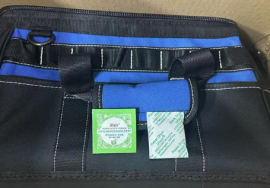
- Cross-border sea freight protection: Providing anti-mold cards, desiccants, anti-mold bags, and container ventilation kits to minimize port-of-arrival mold rejection.
- Home care & antibacterial: Gentle yet effective anti-mold products for home, mother-and-baby, and pet markets.
Worth noting, Ai Haoer‘s anti-mold and antibacterial product line has passed a number of domestic and international certifications, including anti-mold grade 0 (the highest level) and antibacterial rate ≥ 99%. The products are widely used across textiles, leather, wood, packaging, home care, and warehousing industries. More product details are available on the Product Center page.

4. Three Practical Recommendations for Enterprises
- Establish an intake — in-storage — dispatch mold-prevention file: For key SKUs, keep a sample from every batch and record temperature, humidity, and mold test results.
- Source prevention beats post-outbreak treatment: Adding anti-mold / antibacterial agents at the raw-material stage, or placing anti-mold cards inside the packaging, costs a fraction of the payout for mold-damaged goods.
- Always pre-inspect before export: Conduct a pre-loading mold inspection and bundle anti-mold cards, desiccants, and container ventilation kits to minimize arrival-port risk.
If your enterprise is struggling with warehouse mold, export rejection, or home-care mold removal, feel free to book an appointment online. A team of Ai Haoer engineers is ready to provide a free inspection and a custom solution assessment. For more real-world case studies, visit the Anti-Mold Case Sharing section.
Related Chinese version: 仓储物流防霉抗菌新趋势(中文版)
(This article is originally published by Ai Haoer’s official website. Please retain the source when reposting.)